
Mesothelioma Life Expectancy: What The Research Shows About Living Longer
Mesothelioma life expectancy: Maybe a doctor gave you a number. Six months. A year. Eighteen months. It helps to know what that number really means.
Life expectancy is an average from large groups of patients, so it can't tell you how long any one person will live. How long someone lives depends on:
- the type of mesothelioma (in the lining of the lungs or the abdomen)
- the kind of cancer cells
- the stage
- the person's age and health
- the treatment they get
Some people live a few months. A small number live many years. No one can promise you a certain outcome.
But studies of large groups have found certain choices that are associated with longer life. This page walks through those choices and the evidence behind each one.
When the evidence is strong, we say so. When it is weak or unproven, we say that too. The goal is to help you have a better talk with your medical team, not to take its place.
Your prognosis is a range, not one number
You may have heard that, without treatment, most people with mesothelioma live about 6 to 12 months. That is a starting point, not a final answer.
Think of survival as a range. Where you land depends a lot on things like cell type and stage. It also depends on a few treatment choices that studies link to better results.
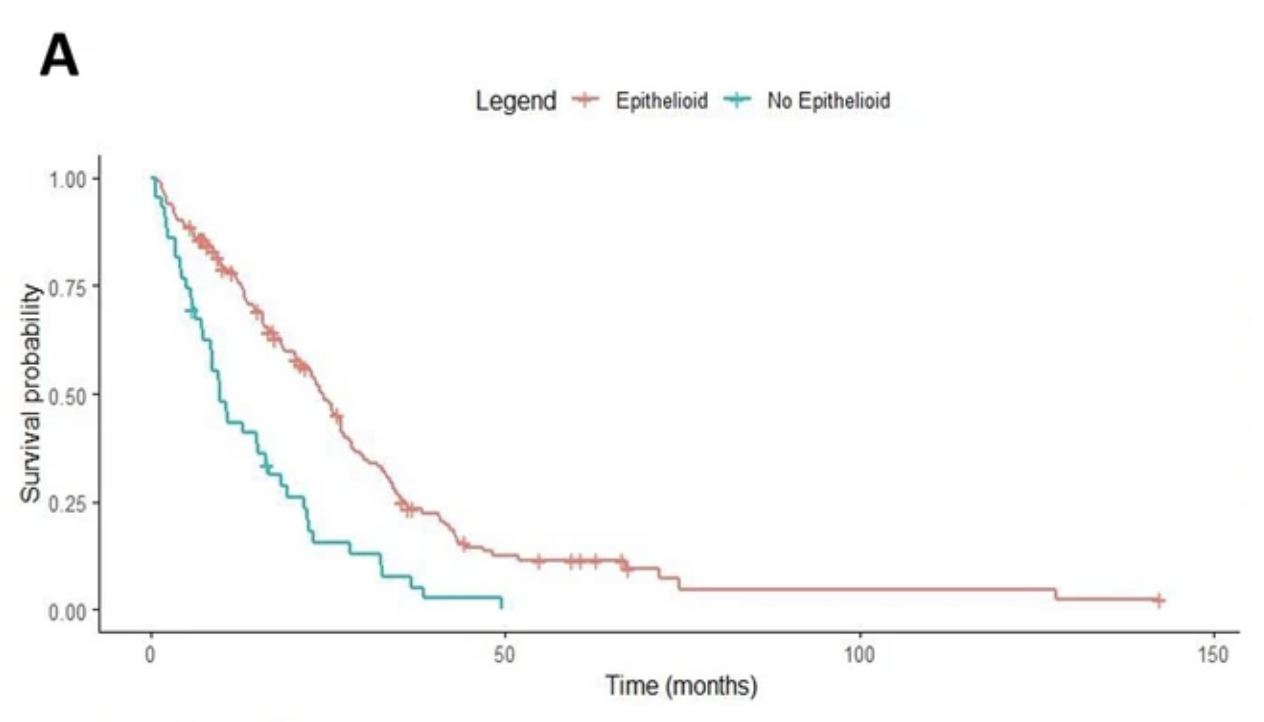
Researchers have studied tens of thousands of patients to learn why some live longer. They found a handful of factors that show up again and again.
The five below have some of the strongest evidence behind them. They aren't the only things that matter, but they're worth knowing about because you can do something about each of them.
The five factors that may impact your life expectancy
People treated at a mesothelioma specialty center tend to live longer
Mesothelioma is rare. In the U.S., only about 3,000 people are diagnosed each year. That is exactly why where you get treated matters more than it does with common cancers.
Several studies found the same thing: people treated at academic or high-volume specialty centers tend to live longer than those treated at community hospitals. For mesothelioma of the abdomen (peritoneal), one large study found about 30% of patients at academic centers were alive at 5 years, compared with only about 18% at community hospitals.
For mesothelioma of the lungs (pleural), specialty-center care has also been linked to longer survival.
Why the difference?
Specialty centers see this rare cancer often, run clinical trials, and have full teams including surgeons, oncologists, and supportive-care doctors. They are also more likely to offer strong combination treatment to the patients who fit it. Part of the gap also comes from healthier patients, and those found earlier, being more likely to reach these centers in the first place.
This isn't a criticism of community doctors. Many are excellent. It is just that experience with this uncommon cancer is very valuable.
For the right patients, combining treatments is linked to much longer survival
Many patients get just one treatment — usually chemo or immunotherapy, sometimes surgery or radiation. For patients who are eligible, combining treatments is linked to better results. Doctors call this multimodal therapy.
A few clear findings:
In one study at a high-volume center, patients with pleural mesothelioma who had chemo plus lung-sparing surgery did well — and patients with the epithelioid cell type and an earlier stage did the best. For mesothelioma of the abdomen, combining surgery with heated chemo placed right in the abdomen (called CRS + HIPEC) has led to a typical survival of about 53 months — more than four years.
One thing matters a lot here: these results apply to carefully chosen patients — usually people with the epithelioid cell type, an earlier stage, good overall health, and tumors a surgeon can mostly remove. This kind of treatment is hard on the body and is not right for everyone. So for the right patient it is a much better option than a single treatment, and is worth asking about.
Immunotherapy helped people live longer in a major trial
For almost 20 years, the standard first treatment for pleural mesothelioma was chemotherapy. A trial called CheckMate 743 changed that. It compared two immunotherapy drugs (nivolumab plus ipilimumab) with standard chemo, in patients whose cancer could not be removed by surgery. Here is what it found:
Because of these results, this drug combo was approved in 2020 as a first treatment option for pleural mesothelioma that can't be removed by surgery. The benefit was strongest for the non-epithelioid cell types (sarcomatoid and biphasic).
An experienced surgery team is linked to better results
For complex cancer surgery, the surgeon's experience matters. Mesothelioma surgery is some of the most complex there is, and most surgeons see very few cases in their whole career.
When one group of hospitals began sending mesothelioma surgeries to specialized surgeons and having a full team review each case, survival improved.
Because this cancer is rare, patients often don't think to ask about a surgeon's experience. But it is a fair and important question:
- How many mesothelioma cases do you treat each year? How many of this exact surgery have you done?
- What are the usual results and complication rates for your patients with this surgery?
- Will a full mesothelioma team review my case?
If the answers are vague or the numbers are low, don't panic. It is a reason to get a second opinion from a surgeon at a specialty center.
Clinical trials and good supportive care
The first four factors are about picking the right treatments and team. The fifth is about two things that can truly help.
He was told he had months to live. He chose to "accept the diagnosis, but reject the prognosis."
In the summer of 1997, Paul Kraus was 52 years old. During a routine operation, doctors found cancer spread through his abdomen. It was advanced peritoneal mesothelioma. He was told he had only months to live.
Paul was terrified. He wrote, years later, about how the shock sent him into fear and confusion. He felt lost in a medical system that moved fast and felt impersonal. He didn't know who to believe, or what to do next.
What he did next is what made all the difference.
He lived about 27 years after that day, until his death in 2024. However it is important to note that Paul's outcome was extraordinary and very rare. No one knows why he lived so long. His survival is not proof that his choices worked. Please don't let any single story lead you to skip proven treatment.
So why share him at all?
Because the most useful thing Paul left behind has nothing to do with what he put in an IV bag. It's how he faced the hardest news of his life. He turned panic into clear thinking. He stopped feeling powerless and became an active, informed patient. He found reasons to keep living and hold onto hope. That part isn't rare or unproven. That part, anyone facing this can use.
Give yourself the best odds
How long people live with mesothelioma varies a lot. The choices described on this page are the ones backed by evidence: getting checked at a mesothelioma specialty center, finding out if you fit combined treatment, asking about immunotherapy, making sure you have an experienced surgery team if you need surgery, and asking about clinical trials and supportive care. None of them promise a certain outcome. But each one is worth bringing up with your medical team.
Those choices are how you give yourself the best medical odds. Paul's book is for the other side of this — the human side. Staying steady. Asking the right questions. Holding onto hope and purpose while you face hard decisions.
Print this page and bring it to your next visit. Ask the questions. And if it would help to see how one frightened patient held onto hope, send for the book.
Citations
- 1Untreated survival (~6–12 months). Bianchi C, Bianchi T. "Malignant mesothelioma: global incidence and relationship with asbestos." Industrial Health. 2007;45(3):379–387.
- 2Peritoneal: academic vs. community (~30% vs. ~18% at 5 years). Welten VM, Fields AC, Malizia RA, et al. "Survival Outcomes for Malignant Peritoneal Mesothelioma at Academic Versus Community Hospitals." Journal of Gastrointestinal Surgery. 2022;26(1):161–170.
- 3Pleural: ~29% at 5 years with chemo + lung-sparing surgery; overall ~12%. Klikovits T, et al. "Multimodal Treatment of Malignant Pleural Mesothelioma: Real-World Experience with 112 Patients." Cancers (Basel). 2022;14(9):2256. (Overall pleural ~12% 5-year survival is a general SEER-based figure.)
- 4Peritoneal: ~53-month median survival with CRS + HIPEC. Yan TD, Deraco M, Baratti D, et al. "Cytoreductive Surgery and Hyperthermic Intraperitoneal Chemotherapy for Malignant Peritoneal Mesothelioma: Multi-Institutional Experience." Journal of Clinical Oncology. 2009;27(36):6237–6242.
- 5Immunotherapy / CheckMate 743 (18.1 vs. 14.1 months; 23% vs. 15% at 3 years; 14% vs. 6% at 5 years; approved 2020). Baas P, Scherpereel A, Nowak AK, et al. "First-line nivolumab plus ipilimumab in unresectable malignant pleural mesothelioma (CheckMate 743): a multicentre, randomised, open-label, phase 3 trial." The Lancet. 2021;397(10272):375–386.
- 6Surgical team experience (16.7 → 22.6 months). Ossowski S, Velotta JB, et al. "Improving outcomes in malignant pleural mesothelioma in an integrated health care system." Journal of Thoracic Disease. 2022;14(9):3352–3363.